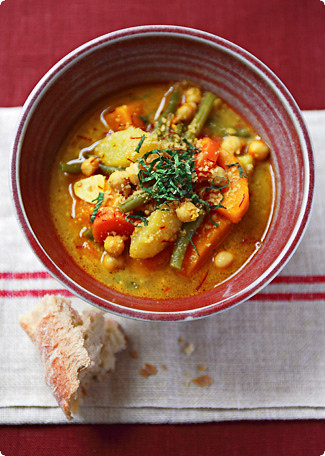
Olla Gitana (Gypsy Pot)
There’s a piece of long-held wisdom in the culinary world that the true test of a cook’s abilities is not how well they can execute the most complex dish in their repertoire, but rather how well they can do the most basic one. When Gordon Ramsay, for instance, hosted a television series a while back in which he helped struggling restaurants to get back on their feet, the first thing he often did upon entering the kitchen was order the chef to make him a simple, no-frills egg and butter omelette. In typical Ramsay style the vast majority of them ended up going straight from his mouth to the trash (accompanied, of course, by a copious shower of expletives), but his point was more profound: if you can’t do the simple stuff well, you probably won’t be able to do anything well, and before any cook thinks of moving on to foie gras and caviar, that omelette needs to be perfect. While I certainly wouldn’t dream of arguing the principle (especially not with Gordon), when it comes to the specifics, I will admit to a slightly different view. Ramsay and his cronies can slave over all the perfectly crafted omelettes they want – from my perspective nothing cuts to the chase of kitchen competence like a bowl of plain old vegetable soup.
Having spent the better part of a decade as a vegetarian, I can safely say that I know vegetable soup pretty well. In fact, there were times in which I had little else to sustain me. One of these was during my first year in college, when like all other freshman students, I was under obligation to live in university housing and eat on their meal plan. The dining hall there was catered by a well-known national firm that lumped our service into their hierarchy of quality at grade F, otherwise known as ‘food for those in no position to complain, a.k.a. prisons and colleges’. Every day, along with the flabby, grey meat in one form or another and deep-fried fish or chicken patties, there would be a single vegetarian dish, most often a variation on some kind of vegetable soup. Next to this there was a selection of two or three boiled vegetables that rotated daily: peas, carrots, potatoes, lima beans, corn, green beans, broccoli. The interesting thing was that the daily soup special had mysterious correlations with what had been gracing the vegetable chafing dishes the day before: if peas and carrots had been on the menu, we could count on a watery tomato broth with peas, carrots and maybe a handful of pasta. Some days we could even trace the vegetable lineage back two or three days, with those peas and carrots sharing space with some very dilapidated lima beans or corn. I suppose they served vegetable soup because it seemed like a safe bet, not only cheap but ostensibly nutritious, and because it functioned as a catch-all for nearly every dietarily-challenged group that might pass through the dining hall doors: vegetarians, vegans, diabetics, dieters, wheat-, dairy- and just-about-everything-else-allergics. And while none of it could be mistaken for a highlight of my culinary existence, the experience did leave me with one valuable thing: a particularly keen eye for a GOOD bowl of vegetable soup.
Vegetable soup, unfortunately, is often seen either as a dumping ground for what is too old or tasteless to consume in any other form, or as a form of punishment from the school of ‘if it’s healthy, it must taste accordingly!’ philosophy. This couldn’t be further from the truth, however, and even without the addition of truffles, foie gras, or copious amounts of cream and cheese, a little care lavished on a pot of top-quality vegetables can turn out something extraordinarily delicious. Case in point: this delightfully-named concoction I stumbled across in Anya von Bremzen’s The New Spanish Table, a wonderful compendium of recipes that illustrate how Spanish cuisine is evolving at breakneck speed to become one of the freshest and most exciting in the world. The gypsy pot (or stew, as it’s more commonly translated) stems from the region of Murcia in southeastern Spain, and owes its name to two things: its notable lack of meat which links it with poverty, and its seemingly anarchic list of ingredients: pumpkin, pears, chickpeas, almonds, tomatoes, mint and saffron (and from this you get a good sense of what the Spanish think of gypsies). Ollas are, in fact, common fare throughout Spain, but most draw the line at a few vegetables, some beans and a chunk of meat or two for flavor – I’ve certainly never been served one that incorporated anything this daring.
I was, then, surprised to discover that this is no avant-garde reinterpretation of a traditional peasant stew – on the contrary, this bizarre and intriguing assortment of ingredients is as traditional as it gets for Murcian stew-makers, though naturally the precise recipe varies. What surprised me most, however, was how delicious it was. Rich, earthy, with the slightly sweet note imparted by the pears marrying perfectly with the dusky saffron and the unexpected clarity of mint, it somehow tastes even more delicious knowing you can go back for as many guilt-free bowlfuls as you like. And trust me, you’ll want to.
Not to mention that armed with this recipe, in any contest of cooking ability I’m now sure I would blow away the competition. That is, unless they’d want me to demonstrate my omelette-making skills as well—which are, I’m afraid, seriously in need of some work.
Olla Gitana (Gypsy Pot)
Serves: 4-6
Source: slightly adapted from The New Spanish Table by Anya von Bremzen
2 14-oz (400g) cans chickpeas, drained
1 fat carrot, peeled and thickly sliced
8 cups (2 l) rich chicken or vegetable stock
1 lb. (450g) pumpkin or butternut squash, peeled and cut into 1-inch (2.5-cm) chunks
10 oz. (280g) green beans, trimmed and cut into 1-inch (2.5-cm) lengths
2 medium slightly underripe pears, peeled, cored and cut into 1-inch (2.5-cm) chunks
coarse salt and freshly ground pepper
3 tablespoons olive oil
3 large garlic cloves, chopped
a handful of blanched almonds
1 medium onion, chopped
1 teaspoon sweet paprika (not smoked)
2 medium ripe tomatoes, finely chopped
1 pinch saffron threads, crumbled
2 teaspoons red wine vinegar, or more to taste
2 tablespoons slivered fresh mint
Combine the chickpeas, carrots and enough stock to come about 1 1/2 inches above the top in a large heavy pot and bring to a boil over medium heat. Add the pumpkin, green beans and pears and season with salt to taste. Bring to a simmer and cook uncovered until the vegetables have softened, about 15-20 minutes.
Meanwhile, heat the olive oil in a medium skillet over medium heat. Add the almonds and garlic and cook, stirring, until golden, about 2 minutes. Using a slotted spoon, transfer to a bowl, leaving behind as much oil as possible, and set aside. Add the onion to the skillet and cook until softened, about 5 minutes. Add the paprika and stir for a few seconds, add the tomatoes and a few tablespoons of the cooking liquid and cook until the tomatoes soften and reduce, about 7 minutes. Gently stir the tomato mixture and the saffron into the pot with the chickpeas.
Continue cooking until all the vegetables are very soft and the pumpkin is almost falling apart, 5-7 minutes longer, adding more broth if the stew seems too thick. Meanwhile place the fried garlic and almonds in a food processor or coffee grinder and grind until finely ground (you can also use a mortar and pestle). Stir in the vinegar, and add this to the pot with the chickpeas. Taste for seasoning, adding more salt, pepper and/or vinegar if necessary. Let the stew cool for about 10 minutes. Garnish with the mint and serve with lots of crusty bread.
 The Traveler's Lunchbox
There are times when simple is best, for me more often than not. Soup tops the list for me, and this vegetable soup must be amazing. And with pears, even! YUM! It’s probably a bit too early to run to the kitchen to start it at 6am, isn’t it? 🙂
Love the gypsy name, love the unusual combination of everyday ingredients! Bookmark! Off topic food-wise but on topic gypsy-wise: I much recommend the book Bury Me Standing.
Miam miam. Gorgeous looking Melissa. These are just the kind of soups I like. Hearty, and the bread, the croûton that you just want to dip in. Looks so sensual to me! I can see the juice drip down! 😉 Funny as I am about to post about a veggie soup too!
I love the little piece on ramsay’s take on the fundamentals. I furthermore love the fact that you agree with it. Well written.
To begin with, I must say that your site is sublime.I had wanted to post a comment on your "hachapuri" entry, but discovered your site very recently. This soup makes me want to post again, because it reminds me of two of the most delicious food items I have ever eaten, which were at a Georgian restaurant in Moscow (and they weren’t just good because the rest of the food was so bad). They were a vegetable soup and hachapuri (and I’m ecstatic that I now have a name and recipe so I can make it myself). The soup was thick and brimming with a new assortment of fresh veggies each time we went to the restaurant. Each bowl amazing. The hachapuri made me want to cry with happiness. Thanks for helping to bring back such great memories.Oh, and I just made bakhlava recently (before finding your site). My fear of phyllo is at an end. What a satisfying dish, and easy to tweak to one’s own taste. I can’t wait to see what you post next!
Wonderful post! Simply awesome!Yours is one of a handful of sites that is WELL worth taking the time to actually READ! The down-to-earth, unpretentious style of your well-crafted articles is quite refreshing. I’m ashamed to admit it, but I’ve been sleeping on your site for a while now (cruising by occasionally only to view the photos). Well, not anymore! Your writing is, in a word … exquisite!You inspire and humble me, at once.Thank you!
Isn’t this a wonderful cookbook? Your soup sounds and looks terrific. I think I’m just going to have to buy the book-I’ve had it out of the library 3 times now! I love the thought of the pears.
oh great! i only have one soup in my repertoire of 2-3 dishes, this one will be a tasty addition. thanks. 1 question: i have some 1-2 year old saffron, for how long is it usable?
Ahhhh … soup! Lately, I’ve become a real soup person — soup is in the menu at leat once a week. It’s such a simple thing to make, and making a big batch I can enjoy it for both dinner and a left-over lunch. Got to try this recipe!
Am very intrigued by the addition of pears in the soup, as I’ve never before come across that. Sounds like a crucial secret ingredient though, no?. Not sure why, but my body and mind are so craving healthy food at the moment, so I’m moving your olla gitana to the top of the list of recipes to try.
This recipe will set a lit flame under me… as I am kitchen challenged, and a vegan as well. I cannot wait to try it! I am going to link to your site to read all your creations. Plus share your wealth. Side note – looking forward to reading about your travel as my hubby and I are headed to Europe next year. Cheers!
I am a big fan of Anya’s new book, too. This gypsy stew sounds and looks wonderful. Definitely will have to go near the top of the recipes-to-try pile.
Can’t believe its soup – I made this for the kids and I for lunch today and it was delicious. We didn’t have any pears so I used apple – it gave the dish a sweetness that was indescribable. I usually don’t care for soups but I will make this all winter – thanks so much.
What a delicious looking soup and sounds very simple to make. My kind of soup!I saw that a few episodes of Gordon’s show and I actually liked it and learned from it. One of these days, I’ll have to learn how to make a nice simple omelette. ;-)Paz
Melissa, this soup looks and sounds exquisite. I’m very much with you in believing that vegetable soup is one of the true tests of an admirable cook, and I have a few of my own that I’m quite fond of — but your gypsy pot is clearly a must-try!
I would never have thought of adding anjou pears. I cannot wait to try your recipe. It not only sounds wonderful, it looks so delish!I am your devoted fan,Flaurella
Hi Melissa — Couldn’t resist making the Gypsy Pot! It was wonderful — thanks for much for the inspiration! AK PS It’s posted here – http://kitchen-parade-veggieventure.blogspot.com/2006/03/day-350-gypsy-pot.html
Hey Melissa, that soup looks yummy, and very healthy! Since moving to Paris, suddenly I am exposed to those old programs of Gordon Ramsay’s where he helps various restaurants.. And though the programs are dubbed, I can generally here his generous use of expletives coming through loud and clear. Which only makes it that much more fun to watch. Anyway, your gypsy pot sounds great and I love the idea of serving it with couscous..
hi melissa, how delicious and beautiful! amongst the many alternative careers you could consider pursuing given your many talents, what about opening a traveler’s soup kitchen – every single soup you’ve ever posted just makes me want to hop onto a plane to wherever (come to think of it, perhaps right to your doorstep ;))
Great timing on what sounds like a great dish. April 8th is the Worldwide Festival of the Romany (or, gypsies), and I was looking for a good Olla Gitana as the starter dish for a dinner menu that night!
As the weather quickly turns colder and colder down here in Chile, this soup seemed the perfect antidote to our high ceilings and no central heat. Plus, all the ingredients are actually available! (a rarity, I assure you) My meat-loving boyfriend was skeptical, but I think it was the pears that changed his mind…Fabulous recipe.
Hi everyone, thanks for all your wonderful comments! I haven’t had time this week to respond to everyone individually, but your kind words are, as ever, much appreciated. Justine, Alanna and Jennie – so glad you liked the recipe! Thanks for your reports :)Googs – I have saffron that is considerably older than that, and it’s fine. If you have any doubt, just sniff it – if it still smells like saffron, you’re in business!SaltShaker – I hadn’t realized the International Day of the Roma was coming up, so the timing was purely coincidental! Thanks for pointing it out though – I’ve enjoyed reading more about it.
Melissa, this looks like a delicious bowl of soup, especially with a nice hunk of crusty bread.I was once a vegetarian, and I share with you the pain of eating vegetarian university residence food during first year. I was only able to stomach "Savoury Rice & Spinach Bake" a few times, which left only scavenging at the salad bar. Suffice it to say that, instead of gaining the "Frosh Fifteen," I lost twenty pounds my first year.I also agree wholeheartedly with your assertion that vegetable soup is a definitive test of kitchen competence. Hell, I might even narrow it down to just the ability to make good vegetable stock — I find many to be thin or very heavily salted. In my books, anyone who can make a rich, flavourful veggie stock has promise.
Hi, Melissa. I recently discovered your wonderful blog. I belong to a cooking club and I prepared the Georgian cheese bread at a gathering recently. Raves all around. It was good and particularly so the next day when it was thoroughly cool. The khachapuri would also work, I think, with a sweet filling of, say, sweetend ricotta or even a good fruit preserve. I love all the articles and photos you post. Cheers, Mark.
Melissa, my pleasure, and while I made my own variation on your soup, after looking at several different recipes, it turned out specatcularly well! http://www.saltshaker.net/20060409/el-dia-mundial-de-los-romanis
Well thank you so much for this great recipe, I made it today and it was fantastic! I love the sweet mingling with the tangy. I added some extra butternut squash and it made it divine. Thanks so much.
Melissa, We love interesting soup recipes. This is an intriguing one indeed. Will try immediately. I have a lovely Morroc fish stew recipe with turnips and dates that I love to play with in terms of varing ingredients – pumpkin to replace sweet potatoe or kumera (from New Zealand)- or figs instead of dates – orange instead of lemon (didn’t work)- hadn’t thought of pears. But guess what? It seems to have a similar genus to your "Olla Gitana". Such good fun and a meal to eat after. I’ll be ordering the "New Spanish Cookbook" asap. By the way – I’ve never liked Rose wine but I am looking for a Rose that has an earthy robustness (low sweetness)perhaps a hint of citrus towards orange bloosom to serve with my fish stew. Any thoughts. Many thanks IvanR
Oh yum! I love comfort food like this. I make something similar which sweet potatoes. We’re well into the rainy/typhoon season here, and times like these call for a nice warm pot of yumminess! Thanks. 🙂
I made this in school it was wonderfull thankyou so much spain i throughly enjoyed this dish!
Melissa, I have made this several times now for my daughter’s family that includes three small children. They beg me to make it again and again. These are children that normally eschew vegetables of any kind. It’s a winner! And I love it, too. Thank you so much.
This may sound odd, but this is what I make when I don't want my cooking to be compared to anyone else's: while most have a spaghetti and meatballs or chili recipe in their repertoire, few can say they've made such an unusual yet tasty soup. It takes gumption to make this vegetable dish the star of the show (as I have on several occasions) but I've never regretted it. Thanks for the recipe!
I found a similar recipe for Gypsy Soup some weeks ago and am completely in love with it. There are so many ways to change it, it is colourful, healthy, tasty – it just makes me feel happy and comfortable.
This sounds so very good~ Thank you!
Absolutely lovely recipe! Not a light endeavour but completely worth it!